History of the Collection
I. What the Order claimed
The documents of the Order of the Seven Gates assert a descent from a twelfth-century visionary community, and beyond it from “the seven-fold discipline of the ancients.” The Institute’s position on these claims has been consistent since Cottrell’s day and may be stated briefly: they are inventions of the eighteenth century, composed by men who wished their society older than it was. The reader who finds this severe is referred to the parallel case of the masonic craft, whose own traditional histories once traced it to the Temple of Solomon, and which modern scholarship dates, in its organised form, to the decades around 1717.
II. What can be documented
The earliest material the Institute regards as genuine belongs to the seventeenth century. Six printed leaves survive of a tract called The Seven-Fold Profession (Frankfurt, 1618), issued in the years when the Rosicrucian manifestos had made such professions briefly fashionable across Protestant Europe. No complete copy is recorded. Whether the tract’s authors constituted a society, or merely wished to, cannot now be determined.
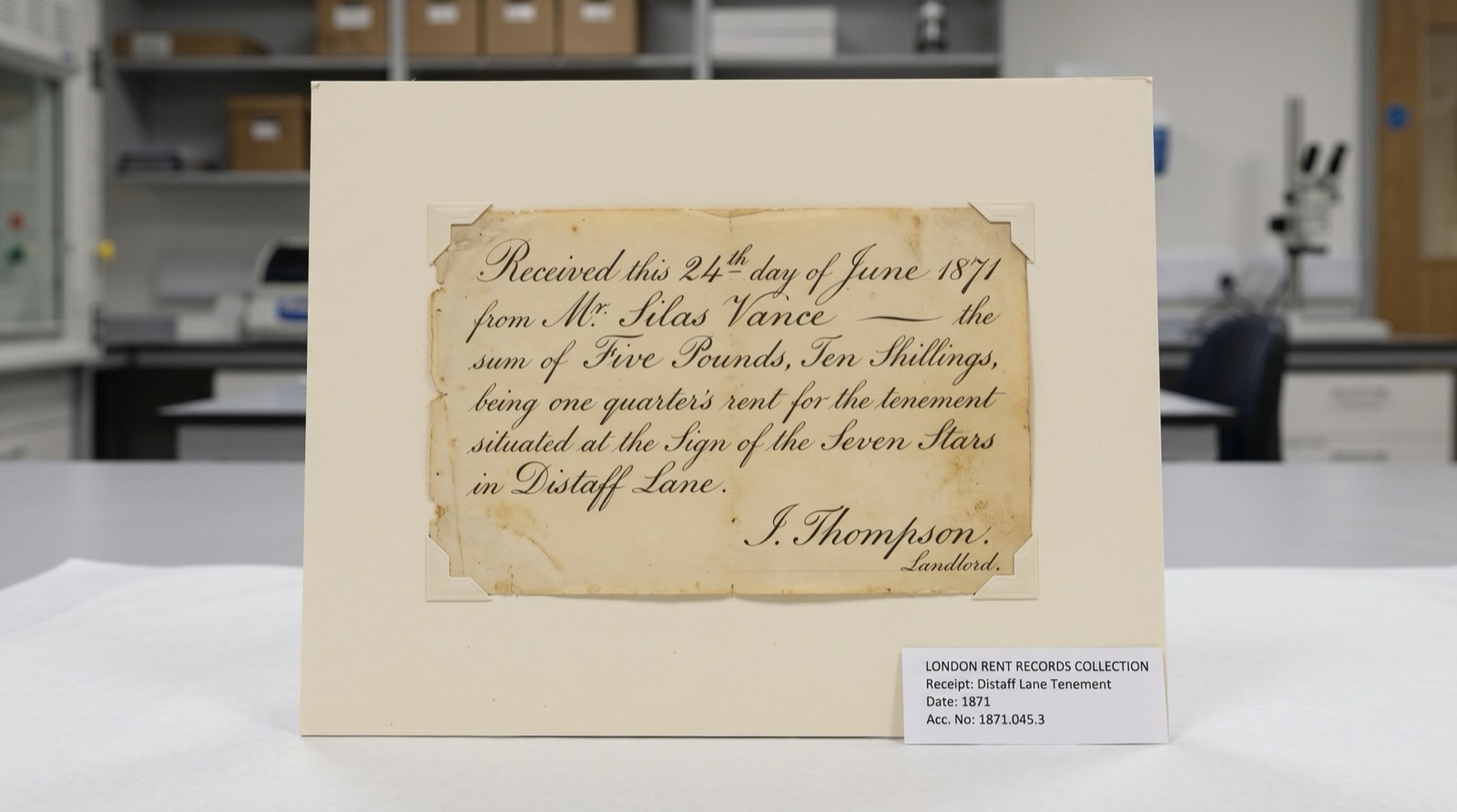
A letter of 1658 in the Institute’s archive, in the hand of Thomas Vaughan, declines an approach by persons he calls “the seven-gated men,” and dismisses their method in a phrase the Institute has, with some irony, adopted as nearly a motto: a ladder built downward. The letter is the only seventeenth-century evidence that the profession had adherents in London. Their meeting-house, later tradition placed at the sign of the seven stars in Distaff Lane; if so, it burned in September 1666 with whatever records it held, and the trail is cold for a century.
III. The revival, and the problem of the record
In 1768 one Elias Pryce-Gwyn of Denbigh, lately expelled from his masonic lodge for irregular workings, announced the “re-erection of the Gates” in London. Nearly everything the Order afterwards believed about its own past passed through his hands, and here the record meets its great difficulty: Pryce-Gwyn moved in the London-Welsh antiquarian circles around Edward Williams — Iolo Morganwg — whose fabrications of bardic tradition are now notorious, and whose papers and Pryce-Gwyn’s were for a time kept in the same chest. The Institute’s view is blunt. After the 1790s, no document in which the Order describes its own history can be trusted, and several bear marks of composition long after their professed dates.
Pryce-Gwyn died in 1801. Such of his papers as remained were destroyed in a solicitor’s fire at Wrexham in 1834.
IV. The nineteenth century
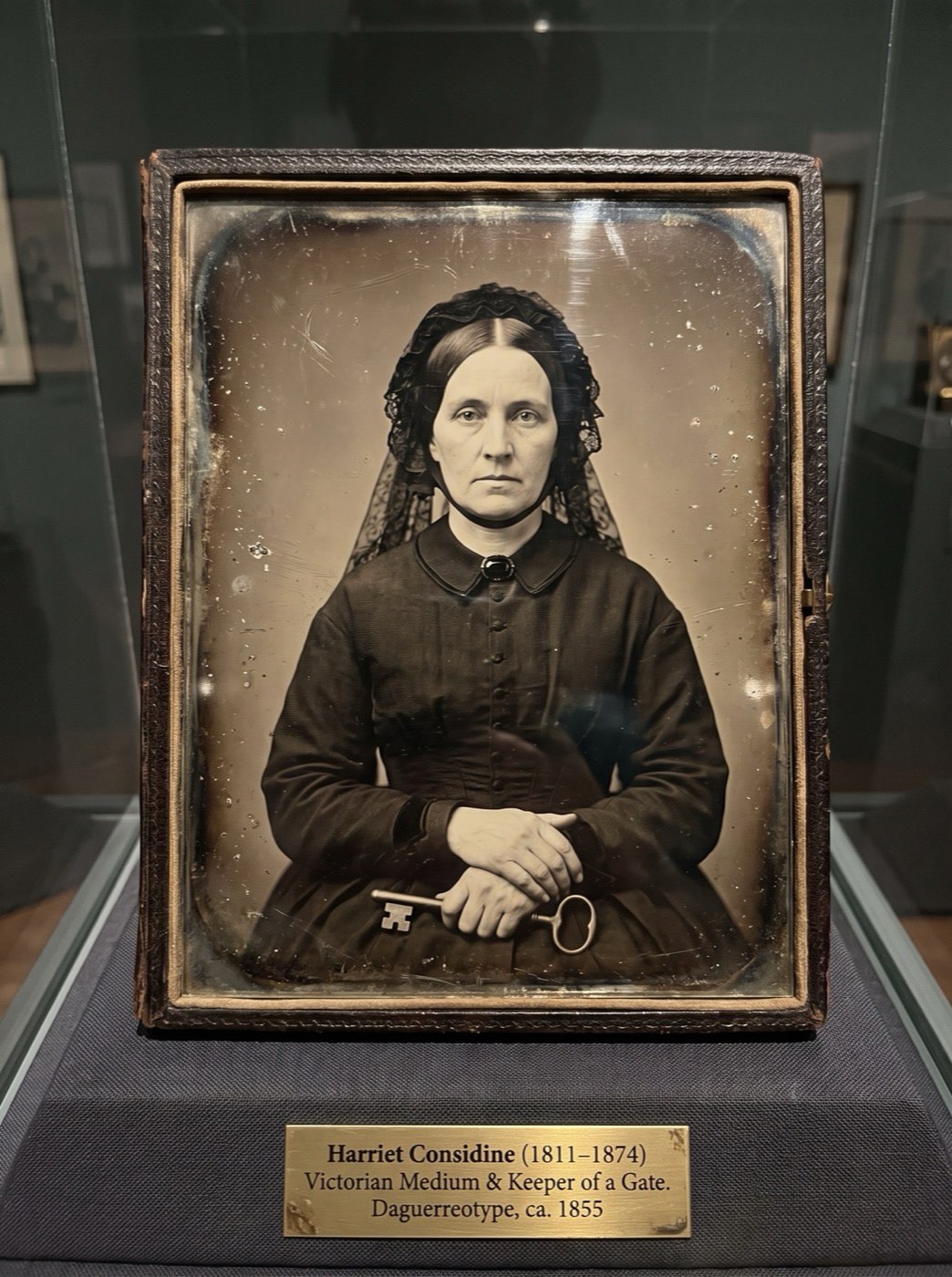
The Order that emerges in the Victorian documents is small, serious, and increasingly ornate. Its register — the Vigil Book — runs from the 1770s to 1917, though many leaves were cut out by the compilers themselves, for reasons on which the Institute does not speculate. The diary of Harriet Considine (1811–1874), translator, medium, and the only woman the register documents as Keeper of a Gate, is the most vivid witness to its practices; the diary’s middle third was excised by a contemporary hand.
The Order’s instruments and furniture mostly belong to this late period. The Institute would draw the visitor’s attention to the tablet of the goat-headed figure in the permanent collection, whose iconography reproduces an engraving first published in Paris in 1856. The object is therefore no older than that date, whatever was claimed for it, and the collection thus serves as its own best commentary: the Victorians did not inherit the robes they wore.
An approach made in 1889 to a newly founded and now much better-known hermetic society, for a “concordat of the gates,” was declined by that society’s chiefs. It appears to have been the Order’s last attempt at increase.
V. Dissolution
The register records a final convocation of eleven members in 1917. In March 1919 the Institute’s founder received, through a solicitor acting for “the surviving trustees of a dissolved private society,” forty-one objects and a sealed archive, together with an Instrument of Dissolution signed only by “the Warden,” in a cipher which has not been read. Nothing further is heard of the Order. Sir Everard’s own relationship to it, if he had one, he did not disclose, and the Institute has never found cause to amend the word it has always used for its role: custodial.
A portion of the sealed archive, removed from London for safekeeping, was destroyed by enemy action in 1940–41. The war-losses list was published in Cygnus and is shorter than the Institute would wish.